


541597
PROFESSOR

Ex-INEC Director Questions 1.5 Million Invalid Voter Records, Demands Explanation From Amupitan

Ex-INEC Director Questions 1.5 Million Invalid Voter Records, Demands Explanation From Amupitan

# Ex-INEC Director Questions 1.5 Million Invalid Voter Records, Demands Explanation From Amupitan

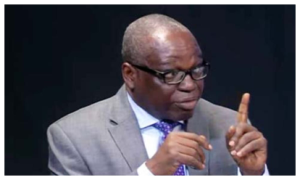
A former Director of Voter Education and Publicity at the Independent National Electoral Commission (INEC), Oluwole Osaze-Uzzi, has questioned how approximately 1.5 million questionable voter records found in the commission's database were allowed to enter the national voters' register.

Osaze-Uzzi described the development as difficult to understand, insisting that the commission had introduced technological measures designed to prevent multiple registrations, identity duplication and other irregularities during voter registration.

He made the remarks during an interview on Arise Television, where he called on INEC Chairman, Professor Joash Amupitan, to explain how such a significant number of questionable entries could have escaped the commission's verification systems.

According to the former INEC director, the requirements for voter registration under Nigerian law are straightforward. He explained that an eligible voter must be a Nigerian citizen who is at least 18 years old and must personally appear for registration.

He said the process should ordinarily be simple because the law clearly defines who qualifies to be included in the voters' register.

"The work ordinarily ought to be easier for the commission. The law is quite clear about who is entitled to be on the register: you're a Nigerian citizen, you're 18 years and above, and then you go there, and you register. It's as simple as that," he stated.

Osaze-Uzzi expressed further concern over the reported discovery of 1.5 million questionable entries, particularly because INEC requires prospective voters to appear physically for registration and undergo biometric data capture.

He questioned how such a large number of irregular records could have found their way into the database despite the safeguards already established by the electoral commission.

He also pointed out that technological solutions, including artificial intelligence and biometric identification systems, should make it increasingly difficult for individuals to register multiple times or manipulate the registration process.

"You must turn up physically for the registration. So it should be a straightforward, simple process. But Nigeria, being what it is, the simpler it is, the more complex things, issues, and challenges arise from those things," he said.

The former director added that he could not understand how up to 1.5 million questionable records could have been captured in the register, considering the technological systems available to the commission.

He maintained that multiple registrations and similar irregularities should not be happening if the existing verification mechanisms were functioning effectively.

Osaze-Uzzi also raised questions about the circumstances surrounding INEC's review of its voter database, noting that the commission had yet to provide sufficient details about the period covered by the exercise and how the questionable entries were initially identified.

He stressed that while the Automated Fingerprint Identification System (AFIS) and artificial intelligence can help detect duplicate registrations and suspicious records, the commission must go beyond identifying the anomalies.

According to him, INEC owes Nigerians a clear explanation of how the questionable records entered its database in the first place and why the available safeguards failed to prevent them.

The development has raised fresh questions about the integrity of Nigeria's voters' register, particularly as the country continues preparations for future elections.

Osaze-Uzzi's comments place renewed attention on the responsibility of INEC to maintain an accurate, credible and transparent voters' register, which remains a critical component of the country's electoral process.

A former Director of Voter Education and Publicity at the Independent National Electoral Commission (INEC), Oluwole Osaze-Uzzi, has questioned how approximately 1.5 million questionable voter records found in the commission’s database were allowed to enter the national voters’ register.

Osaze-Uzzi described the development as difficult to understand, insisting that the commission had introduced technological measures designed to prevent multiple registrations, identity duplication and other irregularities during voter registration.

He made the remarks during an interview on Arise Television, where he called on INEC Chairman, Professor Joash Amupitan, to explain how such a significant number of questionable entries could have escaped the commission’s verification systems.

According to the former INEC director, the requirements for voter registration under Nigerian law are straightforward. He explained that an eligible voter must be a Nigerian citizen who is at least 18 years old and must personally appear for registration.

541599 (2)

He said the process should ordinarily be simple because the law clearly defines who qualifies to be included in the voters’ register.

“The work ordinarily ought to be easier for the commission. The law is quite clear about who is entitled to be on the register: you’re a Nigerian citizen, you’re 18 years and above, and then you go there, and you register. It’s as simple as that,” he stated.

Osaze-Uzzi expressed further concern over the reported discovery of 1.5 million questionable entries, particularly because INEC requires prospective voters to appear physically for registration and undergo biometric data capture.

He questioned how such a large number of irregular records could have found their way into the database despite the safeguards already established by the electoral commission.

He also pointed out that technological solutions, including artificial intelligence and biometric identification systems, should make it increasingly difficult for individuals to register multiple times or manipulate the registration process.

“You must turn up physically for the registration. So it should be a straightforward, simple process. But Nigeria, being what it is, the simpler it is, the more complex things, issues, and challenges arise from those things,” he said.

The former director added that he could not understand how up to 1.5 million questionable records could have been captured in the register, considering the technological systems available to the commission.

He maintained that multiple registrations and similar irregularities should not be happening if the existing verification mechanisms were functioning effectively.

Osaze-Uzzi also raised questions about the circumstances surrounding INEC’s review of its voter database, noting that the commission had yet to provide sufficient details about the period covered by the exercise and how the questionable entries were initially identified.

He stressed that while the Automated Fingerprint Identification System (AFIS) and artificial intelligence can help detect duplicate registrations and suspicious records, the commission must go beyond identifying the anomalies.

According to him, INEC owes Nigerians a clear explanation of how the questionable records entered its database in the first place and why the available safeguards failed to prevent them.

The development has raised fresh questions about the integrity of Nigeria’s voters’ register, particularly as the country continues preparations for future elections.

Osaze-Uzzi’s comments place renewed attention on the responsibility of INEC to maintain an accurate, credible and transparent voters’ register, which remains a critical component of the country’s electoral process.

Leave a Comment

Your email address will not be published. Required fields are marked *

Scroll to Top