


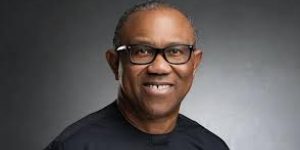
Peter Obi, presidential candidate of the Nigerian Democratic Congress (NDC), has criticised a Federal High Court ruling in Abuja which nullified the emergence of David Mark as National Chairman of the African Democratic Congress (ADC), warning that the development could create uncertainty ahead of the 2027 general elections.
Obi, in a statement released on Thursday, November 5, 2026, expressed concern over the timing of the court’s decision, arguing that political uncertainty involving parties and their candidates shortly before a general election could undermine the democratic process.
The former Anambra State governor, however, clarified that he was not challenging the authority of the judiciary or disputing its right to determine legal matters.

He said his concern was the potential consequences of the ruling, particularly at a time when political parties should be preparing for the forthcoming elections.
Obi described the development as unsettling and surprising, noting that Nigerians needed clarity about the political parties and candidates expected to participate in the elections.
He said: “I do not challenge the ruling of the court. The court of law is constituted to determine disputes according to the law. My concern is that three months before a general election, it is in the public interest to have certainty.”
Obi further accused the ruling All Progressives Congress (APC) of contributing to political instability through what he described as deliberate actions against opposition parties.
According to him, similar developments had occurred during his political struggles within the Labour Party, alleging that such moves were aimed at weakening opposition platforms and restricting the space for meaningful political campaigns.
He also alleged that the same pattern of political hostility had resulted in violence against his campaign activities.
The NDC presidential candidate maintained that democracy should allow voters to determine who governs them through free and fair elections rather than creating circumstances that could leave political parties and candidates uncertain about their participation.
He said the responsibility of protecting democracy rested on all institutions, including the judiciary, political parties and other stakeholders.
Obi reiterated his confidence in the Nigerian judiciary, stressing that he had consistently demonstrated respect for the courts during his time in public service.
He appealed for the protection of democratic institutions and urged stakeholders to ensure that legal and political developments did not undermine the rights of candidates and their supporters.
The former Labour Party presidential candidate also linked the situation to broader democratic concerns across West Africa, where several countries have experienced military takeovers and political instability.
He argued that Nigeria should be strengthening its democratic institutions and protecting opposition politics rather than allowing circumstances that could weaken opposition parties.
Obi further promised that, if elected president, he would give special attention to ensuring that opposition parties remained stable and active.
He said his administration would work towards creating an environment where opposition candidates could freely participate in elections without intimidation or persecution.
“This is a time to strengthen our democracy by allowing the opposition to thrive,” he stated.
He concluded by reaffirming his belief in the possibility of building a better Nigeria, declaring: “A new Nigeria is POssible.”