

Dangote Cement Plc has strengthened its position as one of the most profitable companies on the Nigerian Exchange following a strong financial performance in the first nine months of 2026. However, with its share price reportedly doubling and its valuation rising to about 20 times earnings, investors are increasingly weighing whether the stock still offers an attractive entry point or whether much of its growth potential has already been reflected in the market price.
The cement manufacturer, controlled by Africa’s richest businessman, Aliko Dangote, recorded a 20% increase in revenue to ₦3.77 trillion during the nine months ended September 2026.
Its profit before tax also rose by 41% to ₦1.47 trillion, highlighting the company’s strong earnings performance despite the challenges facing businesses in Nigeria’s operating environment.
The results have reinforced investor confidence in the company, whose dominant position in the domestic cement market has continued to support its revenue generation and profitability.

However, the rapid appreciation in its share price has introduced a new consideration for investors. While the company’s financial performance remains impressive, buying the stock at a significantly higher valuation could expose new investors to the risk of paying too much for earnings growth that has already been recognised by the market.
The investment debate is therefore shifting from whether Dangote Cement is a profitable business to whether its current share price offers sufficient value.
Strong Financial Performance Drives Investor Confidence
Dangote Cement’s latest financial results demonstrate the strength of its earnings capacity.
Revenue increased by 20% to ₦3.77 trillion, while profit before tax climbed 41% to ₦1.47 trillion. The faster growth in profit compared with revenue suggests an improvement in the company’s ability to convert sales into earnings.
The performance also reflects the importance of Dangote Cement’s position in Nigeria’s construction and infrastructure sectors.
Cement remains a critical input for housing development, road construction, commercial buildings and public infrastructure projects. Demand from these activities provides an important market for manufacturers, particularly companies with extensive production and distribution networks.
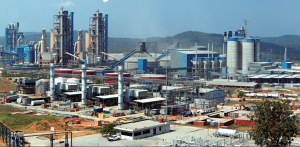
Dangote Cement’s scale gives it an advantage in serving this market. Its established manufacturing facilities, distribution capacity and brand recognition have helped it maintain a strong presence in Nigeria and other African markets.
The company’s financial performance has consequently attracted attention from investors seeking exposure to businesses capable of generating substantial earnings.
Nevertheless, strong profits alone do not automatically make a stock attractive at every price. Investors must also consider how much they are paying for those earnings and whether future growth can support the valuation.
Share Price Rally Raises Valuation Concerns
One of the major developments surrounding Dangote Cement is the significant appreciation in its share price.
The stock has reportedly doubled, reflecting renewed investor interest in the company and expectations of continued improvement in its financial performance.
A rising share price can reward existing shareholders, particularly those who bought the stock before the rally. However, it also changes the investment calculation for people considering entering the market at the current level.
At approximately 20 times earnings, Dangote Cement is being valued at a premium that requires investors to have confidence in its future profitability.
The price-to-earnings ratio measures how much investors are willing to pay for each naira of a company’s earnings. A higher ratio generally indicates that the market expects stronger future growth or considers the company less risky than comparable businesses.
For Dangote Cement, the valuation suggests that investors are already placing considerable expectations on its ability to sustain earnings growth.
This does not necessarily mean the stock is overvalued. A company with strong competitive advantages, consistent profitability and expanding markets can justify a higher valuation.
However, the concern is whether future earnings will grow sufficiently to support the current share price.
If profitability continues to increase, the valuation could become more reasonable over time. But if earnings growth slows or market expectations are not met, investors who buy at elevated prices could face a correction.
The Importance of Its Net-Cash Position
Another factor highlighted in the investment debate is Dangote Cement’s net-cash position.
A net-cash position generally means that a company’s cash and cash equivalents exceed its interest-bearing debt. This can provide financial flexibility, reduce exposure to borrowing costs and give management greater room to fund operations and expansion.
For a capital-intensive business such as cement manufacturing, financial strength is particularly important.
The industry requires substantial investment in factories, equipment, energy infrastructure, transportation and maintenance. Companies must also manage the cost of raw materials, fuel, electricity and logistics.
A stronger balance sheet can help Dangote Cement manage these obligations while maintaining its investment plans.
It may also provide the company with greater capacity to withstand difficult economic conditions and pursue opportunities in markets where demand for cement is expanding.
However, investors should examine the company’s complete financial statements to understand the composition of its cash, debt obligations and future capital expenditure requirements.
A net-cash position is positive, but it does not eliminate operational risks or guarantee that the company’s share price will continue rising.
Billionaire Investor Interest Adds to Market Attention
The stock’s rally has also attracted attention because of reported purchases by a billionaire investor.
Significant investments by wealthy individuals and institutional investors can influence market sentiment, particularly when they involve companies with strong financial performance and established market positions.
Such purchases may be interpreted as a sign of confidence in the company’s long-term prospects.
However, investors should be careful not to base their decisions solely on the actions of prominent market participants.
Large investors may have different investment objectives, financial resources and risk tolerance. They may also have a longer investment horizon than individual shareholders.
The fact that a billionaire is buying a stock does not automatically mean it is attractively priced for everyone.
Individual investors must independently assess the company’s earnings, valuation, dividend prospects, financial position and future growth opportunities before making an investment decision.
What Could Support Further Growth?
Dangote Cement’s future performance will depend on several factors, including cement demand, production costs, pricing conditions and its ability to maintain operational efficiency.
Nigeria’s infrastructure requirements and housing deficit provide significant long-term opportunities for cement manufacturers.
Government investment in roads, bridges and other public infrastructure could support demand, while private-sector construction and housing development may also contribute to higher consumption.
The company’s operations across different African markets offer additional opportunities to diversify revenue and expand its customer base.
However, these opportunities come with challenges. Cement production is energy-intensive, making manufacturers sensitive to changes in fuel and electricity costs.
Transportation expenses, foreign exchange movements, inflation and equipment maintenance can also affect operating margins.
Competition and economic conditions in the markets where the company operates will remain important factors in determining its ability to sustain revenue and profit growth.
Consequently, investors will need to monitor whether the strong earnings performance recorded in 2026 can continue into subsequent financial periods.
Buy, Sell or Hold?
The decision to buy, sell or hold Dangote Cement depends largely on an investor’s entry price, investment horizon and expectations about future earnings.
For existing shareholders who purchased the stock before its recent rally, the doubling of the share price represents a significant gain. Such investors may consider holding their positions if they believe the company’s earnings and long-term growth prospects remain strong.
Others may consider taking some profits, particularly if they believe the current valuation already reflects much of the company’s expected improvement.
For prospective investors, the situation requires greater caution. Dangote Cement’s strong financial performance and market position make it an attractive company to monitor, but its valuation of approximately 20 times earnings means that buyers must be confident that future growth can justify the current price.
Investors may therefore prefer to assess subsequent earnings reports, cash-flow performance, dividend prospects and the company’s ability to maintain profitability before committing substantial funds.
Ultimately, Dangote Cement remains a major player in Nigeria’s industrial and construction sectors, supported by its scale, established market presence and strong earnings.
Its 20% revenue growth to ₦3.77 trillion and 41% increase in profit before tax to ₦1.47 trillion underline the strength of its recent performance.
However, a strong company is not necessarily a bargain at every price. With its share price reportedly doubling and its valuation reaching about 20 times earnings, the key question for investors is whether future growth will be strong enough to justify the premium.
The company’s fundamentals remain encouraging, but the price investors pay today will play a major role in determining the returns they eventually earn.
Editorial note: The supplied source contained only the opening section of the original analysis. This expanded report develops the disclosed financial and valuation issues without inventing additional financial figures or presenting an unsupported investment rating.